

When the task is right in front of you and still feels far away
A lot of capable adults quietly assume that if they were really committed, they would already be moving.
The email is drafted in their head. The document is open. The call has to be made. The next step is not mysterious. And yet something in them pulls back, stalls, or drifts sideways into less important things. Then comes the verdict: I must not want this enough. I must be avoiding. I need to push harder.
That interpretation is common. It is also often incomplete.
Sometimes stuckness is not a sign that you do not care. Sometimes it is a sign that the cost of action has risen beyond what your system can easily pay. Pressure has been building. Energy has been thinning out. Some part of you is already bracing before the work even begins. From the outside, it looks like delay. From the inside, it feels more like friction.
That distinction matters, because people tend to solve the wrong problem. They try to increase force when what is really needed is a reduction in cost.
The moment that gets misread as a character issue
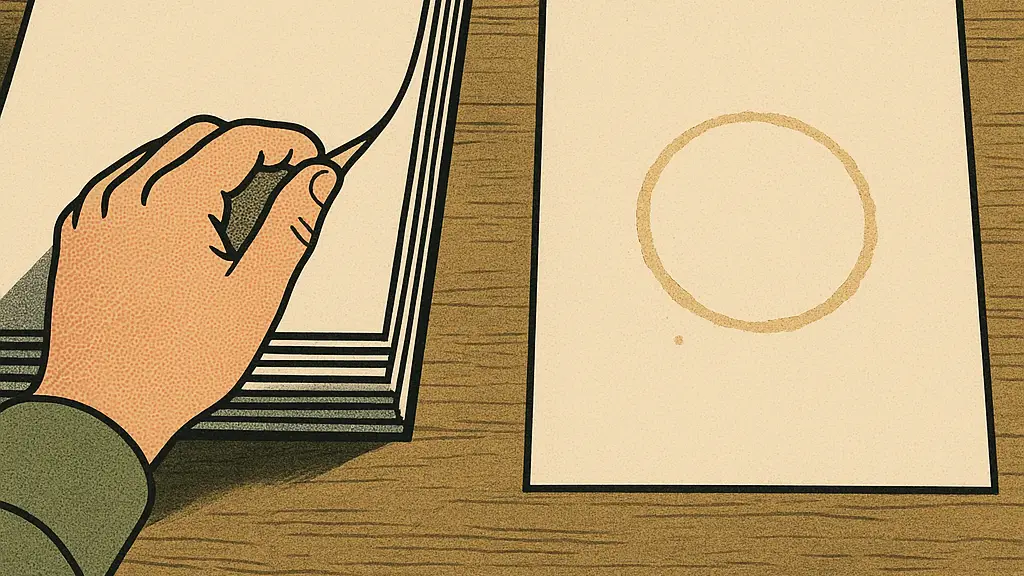
Picture an ordinary afternoon. You sit down at the table with a half-finished cup of coffee, open the file you have been meaning to return to, and feel your jaw tighten before you read the first line. Your breathing gets shallower. You look at another tab for a second, then another. Nothing dramatic is happening, but the task suddenly feels heavier than it did an hour ago when you were thinking about it in theory.
That small moment gets translated very quickly. Instead of noticing strain, many people notice only delay. Instead of saying, this feels expensive right now, they say, what is wrong with me?
This is where self-blame takes hold. Not because the person is weak or confused, but because inactivity is visible and internal load is not. It is easy to judge what can be seen. It is harder to account for the invisible accumulation of pressure, interrupted rest, decision fatigue, disappointment, over-responsibility, and the constant effort of staying composed.
A person can have full intelligence, real care, and solid skill, and still not have easy access to action in a given moment.
Why pushing harder often makes the freeze worse
When stuckness is interpreted as a discipline problem, the usual response is force.
You tell yourself to stop being ridiculous. You promise a stricter routine. You raise the internal volume. You try to shame yourself into motion by reminding yourself how long this has been going on, how simple the task should be, how other people would handle it faster.
Sometimes that works for a short burst. More often, it deepens the problem.
Force adds pressure to a system that is already overloaded. It increases the sense of threat around the task. What began as friction becomes dread. What was already hard to approach now carries a second burden: the feeling that you are failing at being a competent person.
This is why many people end up in a painful loop. The step feels hard. They interpret that hardness as personal deficiency. They apply more pressure. The task feels even harder. Then they gather more evidence against themselves.
None of this means standards do not matter. None of it means effort is irrelevant. It means effort works differently when energy is low and the nervous system is already guarding against more strain. In that state, more pressure is rarely the cleanest path back into movement.
Hidden bracing changes the price of action
One reason this experience is so confusing is that the task itself may not be objectively huge.
The email might take seven minutes. The form might be straightforward. The outline might already exist. But action never happens in a vacuum. Every task lands on top of the state you are already in. If your body is tight, your attention is thin, and your mind is carrying a background hum of pressure, even a reasonable action can start to feel oddly costly.
That is what hidden bracing does.
It is the subtle contraction that says, this will take more out of me than I have. It shows up as tight shoulders, a clenched stomach, a restless urge to check something else, a sense of wanting to disappear for a minute before beginning. Often it starts before conscious thought catches up. Then the mind steps in and creates a moral explanation for a physiological and emotional experience.
This is part of why two people can look at the same task and have totally different internal responses. Or why you can handle something easily one week and feel blocked by it the next. Ability did not vanish. Capacity shifted.
You can be fully capable and temporarily hard to mobilize
Many adults have a hard time accepting this because it sounds, to them, like an excuse.
They worry that if they stop blaming themselves, they will stop moving altogether. So they cling to harshness as if it were the only thing keeping them functional.
But accuracy is not indulgence.
If your car is low on fuel, naming that is not laziness. If a muscle is overworked, adjusting load is not weakness. In the same way, if pressure and depletion have raised the cost of action, recognizing that reality is not avoidance. It is the beginning of a more intelligent response.
This is especially important for thoughtful, high-responsibility people. They are often excellent at overriding themselves. They can perform competence long after internal resources have dropped. The problem is that repeated override tends to narrow access over time. Eventually, even simple actions start to carry the weight of everything that has not been recovered from.
In that state, the question is not, how do I become a more impressive person by tonight?
The better question is, what would make the next honest step feel possible again?
Movement usually returns when the step gets cheaper
Once you stop treating stuckness as a moral failure, a different kind of problem solving becomes available.
If the next step feels too expensive, reduce the price.
That might mean making the task smaller than your pride prefers. Open the document and write two rough sentences instead of committing to the full draft. Reply with one clear line instead of composing the ideal message. Put on your shoes before deciding whether you are doing the whole workout. Gather the papers and place them on the counter without forcing yourself to finish the form right away.
It might also mean reducing hidden strain around the action itself. Unclench your hands. Let your shoulders drop. Exhale longer than usual once or twice. Stand up and reset the room for thirty seconds. Remove the extra tabs. Say the actual next step out loud in plain language.
These are not performance tricks. They are ways of lowering friction so that action becomes affordable.
Small does not mean fake. Small means proportionate.
And proportionate action is often what rebuilds trust between you and your own life.
The goal is not perfect momentum, just honest contact
People often imagine that movement has to arrive as a surge. They wait to feel clear, decisive, and fully ready. But in real life, especially after a period of pressure, movement often returns more quietly.
You answer one message without overexplaining. You read the first paragraph instead of avoiding the whole page. You set out what you need for tomorrow rather than fixing the entire week. You take one step that your system does not have to fight.
That kind of movement can look unimpressive from the outside. Internally, it matters. It interrupts shame. It replaces the story of incapacity with direct evidence of contact. It reminds the body that action does not always have to arrive through force.
Over time, this changes the tone of the relationship. You stop meeting every pause with accusation. You become more willing to ask what the moment actually needs. Some days the answer will be rest. Some days it will be structure. Some days it will be a smaller entry point.
What matters is that the response fits reality.
If this feels familiar, there is a gentler next place to look
If you have been calling yourself lazy, inconsistent, or undisciplined when you are actually depleted and braced, that misreading alone can keep the cycle going.
You do not need a grand reset to begin changing it. You need a more accurate lens. You need a next step small enough that your body does not interpret it as another demand it cannot afford.
That is where momentum often starts again. Not in a dramatic overhaul, but in the moment you stop arguing with your own strain and begin working with it honestly.
If this describes your experience, the next useful place to explore is the first tiny step you keep overlooking.
What to do next
Start with E.M.O.
Start with a guided nervous-system support experience.
Take the EFI
Get emotional clarity and identify your current regulation pattern.
1 on 1 Session
Work directly with guided support when you want faster progress.
