

What If
8 min read
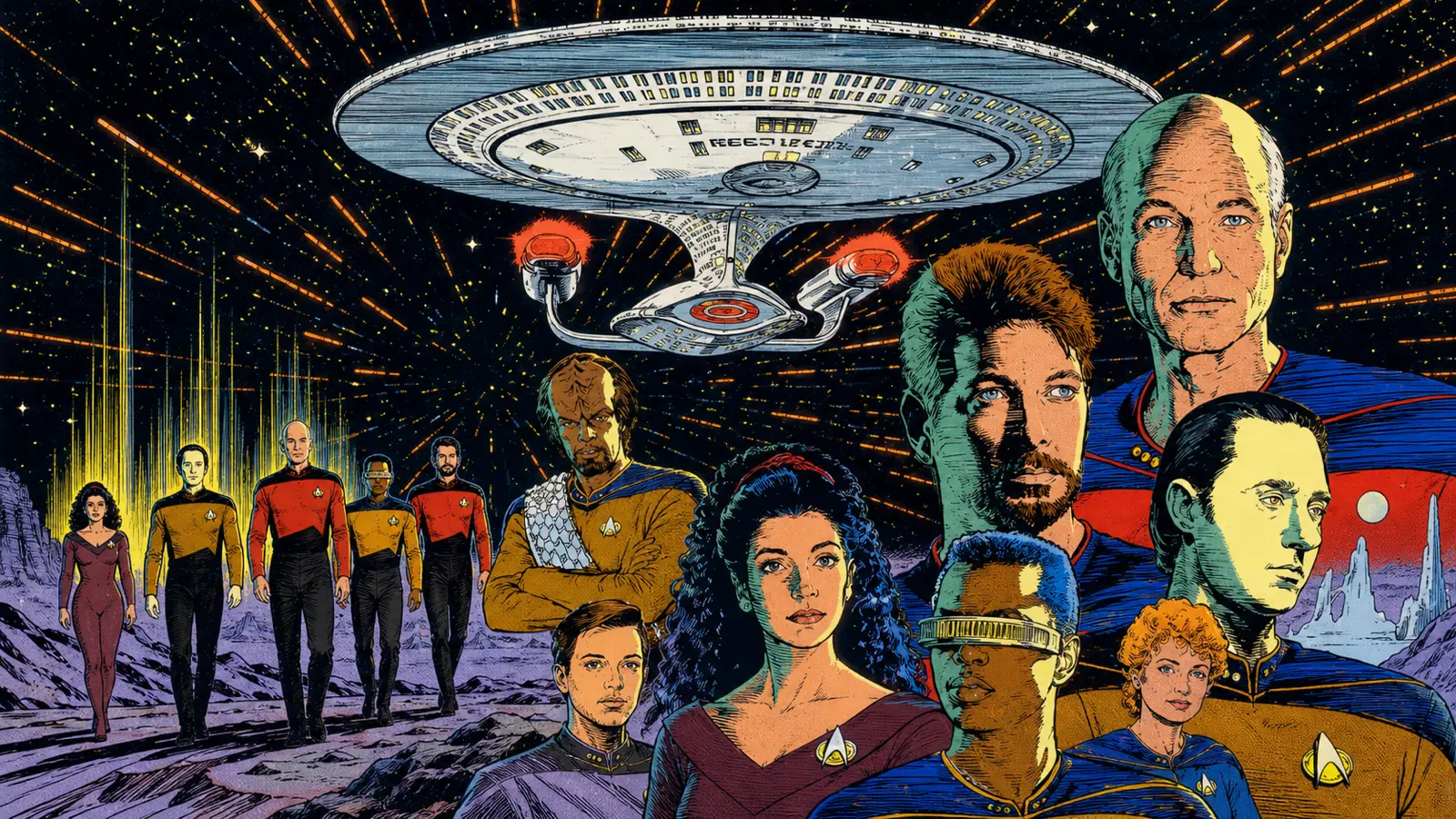
When people say the Star Trek future is unrealistic, they are rarely talking only about technology. Usually the deeper claim is about people. It is the belief that when pressure rises, humans become smaller, harsher, and less trustworthy. Curiosity gives way to control. Cooperation gives way to self-protection. Someone lower in power absorbs the cost, and everyone else learns to call that realism.
When "Unrealistic" Really Means "I Have Been Trained to Expect the Worst"
That conclusion can sound cynical, but it often comes from lived evidence. Many people have spent years inside institutions where mistakes are expensive, speed matters more than thoughtfulness, and safety seems to disappear the moment something goes wrong. In those settings, the body learns quickly. Stay useful. Do not be the easiest target. Explain fast. Hide uncertainty if you can. Hope the pressure lands somewhere else.
After enough repetition, this begins to look like human nature. Not because it is eternal truth, but because it is the pattern most available. If blame, scarcity, and disposability are the dominant conditions, then fear will often look like honesty. Distrust will look mature. Gentleness will look naive.
The Reflex That Gets Mistaken for Human Nature
This is part of what makes the Star Trek future feel distant. Not the idea of better tools, but the idea that people under strain might remain thoughtful enough to repair rather than merely react.
Yet pressure does not reveal only character. It also reveals training.
A school can train children to associate mistakes with humiliation, or with revision. A workplace can train teams to protect image first, or to surface problems early. A clinic, a family, a neighborhood group, a city office, any collective can gradually teach people whether trouble means punishment or learning. Under one set of conditions, people become guarded and strategic. Under another, they can stay present long enough to think together.
That does not mean conflict vanishes. It means the sequence changes. And sequence matters more than people often realize. The first few moments after something goes wrong determine whether energy goes into defense or diagnosis, performance or repair.
What If the Future Is Less About Better People and More About Better Conditions?
What if the Star Trek future is not unrealistic, just unpracticed?
What if its real provocation is not that it imagines morally superior humans, but that it imagines institutions arranged to make our better capacities easier to access? Not all the time. Not perfectly. Just more often than fear.
That question changes the metric. Instead of asking whether people are naturally selfish or cooperative, it asks what conditions make one pattern more likely than the other. Instead of arguing endlessly about whether domination is inevitable, it asks which designs quietly reward it. Instead of treating repair as a personal virtue that exceptional people somehow maintain under pressure, it begins to see repair as something systems can either support or interrupt.
This is a less romantic question than it may sound. It has to do with agendas, handoffs, staffing, decision rights, escalation paths, time buffers, and what happens in the room after a miss. It has to do with whether the structure itself keeps teaching everyone that somebody must become disposable before learning can occur.
A Tuesday Morning With a Different Script
Picture an ordinary meeting at 10:37 on a Tuesday. A deadline slipped. A client is irritated. Coffee is cooling beside an open laptop, and before anyone speaks, the room already knows the old script: explain quickly, narrow the story, protect yourself, do not become the soft target. In a different system, the people closest to the work speak first, the team names what failed before deciding who holds which part of the consequence, and the first question is not "Who can absorb this?" but "What made this miss more likely?"
Nothing dramatic has changed. The deadline is still real. The client still needs an answer. But the emotional shape of the room is different. The energy that would have gone into self-protection can stay available for thought.
Three Structural Choices That Make Repair More Available
One support is sequence before blame. In many fear-trained systems, accountability begins with exposure. The group rushes to identify the person, the error, the weak link. But when that order dominates, people spend their first burst of energy protecting themselves instead of naming the system pressures that mattered. A different sequence does not erase accountability. It slows the jump to disposal long enough to ask what failed, what conditions were active, and what information the system made hard to share in time.
A second support is clear decision rights. People often look indecisive or evasive when the real problem is muddy authority. If no one knows who can escalate, pause, override, or ask for more time without penalty, then avoidable mistakes become much more likely. Under pressure, confusion about authority gets translated into personal weakness. Clearer decision rights do not make a team kinder by magic. They make responsibility more legible, which reduces the need for status games and retrospective blame.
A third support is repair linked to redesign. In many environments, accountability ends at consequence. Someone apologizes, absorbs the hit, and the system moves on unchanged. Then the same pattern returns in a different outfit. Repair becomes real when consequence is paired with a structural adjustment: a smaller handoff, a pre-send check for high risk work, protected time for escalation, fewer conflicting incentives, one less approval bottleneck before an irreversible move. This is not softness. It is what learning looks like when it is taken seriously.
The Signs Would Be Ordinary, Not Grand
If this kind of future were becoming more practiced, the signs would be surprisingly modest.
You might notice that people tell the truth earlier. Risk gets named before it hardens into failure. Junior people do less frantic over-explaining. Managers spend less energy managing appearances and more energy clarifying constraints. Meetings produce fewer vague resolutions and more specific redesigns.
You might also notice nervous system changes that are concrete, even if they are subtle. Less tightening before routine check-ins. Less dread around correction. More ability to stay in the conversation when a problem is real. Quicker recovery after a mistake, not because nobody cares, but because the group knows what repair actually consists of.
And over time, the measurable outcomes would matter. Fewer repeated failures from the same invisible pressure points. Shorter time between noticing a problem and surfacing it. More retained trust after conflict. Better handoffs. Fewer people silently carrying responsibility they do not actually have the power to hold.
None of this sounds cinematic. That may be the point. A more humane future would likely feel less like a grand moral awakening and more like a long series of ordinary situations becoming slightly more livable.
This Is Not Utopia, and It Does Not Need to Be
The alternative here is not a fantasy where conflict disappears, resources become infinite, or power differences stop mattering. Deadlines would still exist. Some people would still make poor decisions. Some harms would still require real consequence. Scarcity would still be real in many places. Accountability would still ask things of people.
But it is possible to distinguish consequence from disposal.
That distinction may be one of the most important cultural skills we have neglected. In a domination-trained system, those two ideas fuse together. If something goes wrong, somebody has to become the lesson. In a repair-capable system, the lesson is carried differently. The cost is named. The failure is not minimized. The redesign is concrete. And the group resists the reflex to treat one person's expendability as evidence of seriousness.
This is part of why the Star Trek future keeps holding attention. Not because it promises a world without friction, but because it suggests friction does not have to end in dehumanization.
The Future Might Begin as a Practice, Not a Belief
Perhaps the most useful shift is simply this: what if distrust is not proof that people are hopeless, but evidence that many institutions keep rehearsing fear more often than repair?
That possibility does not ask for naive optimism. It does not require pretending that people are automatically wise or that better systems build themselves. It only asks whether some of what we call realism is really repetition. A repeated script. A well-trained nervous system. A set of structures so familiar that they start to feel inevitable.
If that is true, then the preferred future may be closer than it appears. Not because it is already here in finished form, but because the capacities it depends on are already recognizable in moments of safety, clarity, and shared responsibility. The work is not to invent a new species of person. It is to practice conditions that make those capacities easier to reach.
And once that question becomes real, another one opens naturally beside it: what other systems might feel less coercive, less sticky, less exhausting, if attention itself had real exit rights?
What to do next
Start with E.M.O.
Start with a guided nervous-system support experience.
Take the EFI
Get emotional clarity and identify your current regulation pattern.
1 on 1 Session
Work directly with guided support when you want faster progress.
