

De-Identified Training Case
From Math Panic to Regulation in a Single EFT Session
When performance panic blocks function, a short, specific EFT sequence can lower intensity enough for the client to re-enter the real task and test the change immediately.
Case Study Note
Case Study Note: As part of my mentoring work with practitioners-in-training in the EFT Universe Clinical EFT Certification program, I share de-identified case studies for educational guidance.
These case studies are primarily training guidance for practitioners in training and secondarily educational for wider readers who want to understand how Clinical EFT work is structured.
All identifying details are removed or adjusted to protect client privacy. Public-facing identity markers, exact wording, and setting details have been adapted so the public version teaches the pattern without exposing the original person. This is a single case, results vary, and additional work may still be needed.
Evidence of Change
SUDs means Subjective Units of Distress, a 0-10 self-rating of emotional intensity in the moment.
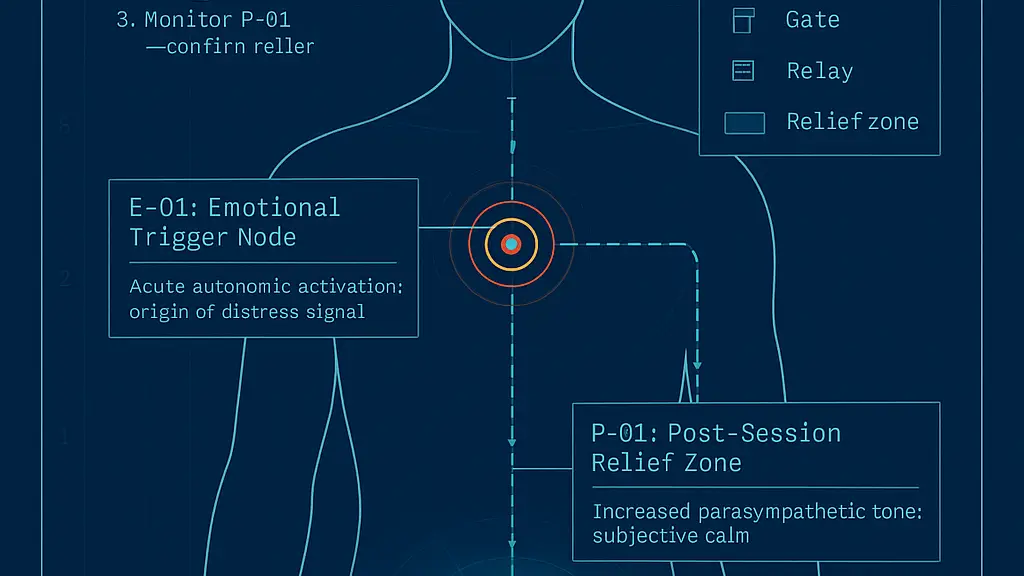
Before tapping, the client rated the task-triggered distress at 8/10. The strongest body marker was in the upper abdomen. The client also described the distress in dark, compressed imagery, which suggested that the experience was being held as more than ordinary frustration.
The first EFT round reduced the intensity from 8/10 to 3/10. That was a meaningful shift, but the remaining charge still mattered. At 3/10, the client was calmer but not fully clear. There was enough activation left that returning to the task too soon could have restarted the same loop.
After moving into Full Basic with 9 Gamut, the residual intensity moved from 3/10 to 0/10.
The most important evidence was not only the number. The real test was behavioral. The client returned to the same school-style task and completed it without the earlier escalation returning during that session window.
Tracked shifts:
- task-triggered distress: 8to0
- first EFT pass: 8to3
- residual activation after Full Basic with 9 Gamut: 3to0
- task engagement: unable to continue -> completed the task without renewed escalation
Session Overview
Underlying Driver
The working hypothesis was that the client was not simply resisting math. The task had become linked with a threat response: getting it wrong, not being able to do it, or feeling trapped in the moment of failure.
When that kind of activation takes over, explanation usually does not help much. The client may already know the instructions, but the body is too alarmed to use them. The first task is to reduce the alarm enough for thinking to come back online.
Session Challenge
The challenge was speed plus precision. The client needed relief quickly, but quick relief could not mean vague reassurance. The target had to stay close to the actual task, the body location, and the client-facing emotional load.
It also mattered not to over-interpret. In a first contact with acute task panic, too much analysis can become another demand. The safer move was to work the live activation, check the number, and test against the real task.
Primary Techniques
- Talk & Tap, speaking about the issue while tapping on EFT points, helped the client stay connected to the problem without needing to explain everything first.
- Basic EFT, a structured set-up and reminder phrase sequence, gave the first intensity drop a clear target.
- Full Basic with 9 Gamut, the full EFT sequence plus a brief orienting set of eye movements, humming, and counting, helped clear the remaining activation.
- Real-world task testing checked whether the change was functional, not only reported verbally.
The session plan was:
- Name the task-triggered distress and locate it in the body.
- Use a short Talk & Tap and Basic EFT sequence to reduce the first wave of activation.
- Reassess instead of assuming the shift was complete.
- Use Full Basic with 9 Gamut for the remaining intensity.
- Return to the actual task as the test.
Session Process
Phase 1: Stabilize the Task Moment
We began with what was happening right then: the math-style task, the self-critical pressure, the fast breathing, and the upper-abdomen distress. I did not start by asking for a long explanation of where the pattern came from.
That was intentional. The client was already flooded. The first useful move was to make the target specific enough to tap on without making the client carry a bigger story than the moment required.
From the client side, the experience was not abstract anxiety. It felt like being stuck inside a task that suddenly became too much. That is the level we worked first.
Phase 2: Use Basic EFT for the First Drop
The first pass used Basic EFT with adapted, pattern-equivalent wording. The focus stayed on the task, the body location, and the felt sense of not being able to do it right.
After that round, the client's reported intensity moved from 8/10 to 3/10.
That drop mattered because it showed the target was responsive. The client was no longer in the same level of panic. Breathing and orientation were easier, and there was more room to continue.
But the session was not done. A 3/10 can still be enough to interfere with learning or restart the loop once the client looks back at the page.
Phase 3: Clear the Residual Activation
Because the intensity remained active, I moved to Full Basic with 9 Gamut. In plain language, this adds a brief orienting sequence to the tapping process. The client keeps contact with the target while also using eye movements, humming, and counting to help the system reorganize.
That second phase reduced the remaining intensity from 3/10 to 0/10.
This was the point where the client's system looked more available. The task no longer appeared to carry the same immediate alarm.
Phase 4: Test With the Actual Task
The final test was not a question like, "Do you feel better?" The test was returning to the same task.
The client resumed the work and completed it without renewed escalation in that session window. That behavioral test mattered because the goal had been functional regulation from the start.
In this case, the useful outcome was simple and concrete: the client went from emotionally flooded and unable to continue to regulated enough to finish the task.
Outcome
The session produced a rapid movement from task-triggered panic to functional re-engagement.
The reported distress moved from 8/10 to 3/10 after the first EFT pass, then from 3/10 to 0/10 after Full Basic with 9 Gamut. The client then returned to the task and completed it without the earlier escalation repeating during the observed window.
The outcome was meaningful because it was tested against the actual trigger. The client did not only report feeling calmer in the abstract. The client could use that calmer state to do the thing that had been unavailable at the start.
More work could still be appropriate if the same pattern repeated in other school, performance, or evaluation contexts. One successful session does not mean the whole history behind math panic is finished.
Why This Worked
This worked because the session matched the problem's level. The client did not need a lecture about confidence. The client needed enough regulation to access the task again.
Specificity helped. We did not tap on a broad label like "school stress" and hope for the best. We tracked the live task, the upper-abdomen distress, the self-critical pressure, and the exact intensity shift after each step.
The sequence also mattered. Basic EFT reduced the first wave. Full Basic with 9 Gamut addressed the remaining activation. The real-world task test then showed whether the shift had practical value.
The practitioner lesson is that task panic often needs a short loop: target, tap, reassess, complete the remaining charge, and test in context. When the goal is functional regulation, the test should be functional too.
Limits + Ethics
This is one de-identified case study. It does not prove that all math anxiety resolves in one session, and it does not suggest that every learning-related struggle is emotional.
Skill support, teaching methods, learning accommodations, and repeated practice may still matter. EFT is not a replacement for appropriate educational support.
What this case shows is narrower: when a client becomes acutely flooded around a task, a specific EFT sequence may reduce the emotional intensity enough for the client to re-engage and test the shift in real time.
What to do next
Start with E.M.O.
Start with a guided nervous-system support experience.
Take the EFI
Get emotional clarity and identify your current regulation pattern.
1 on 1 Session
Work directly with guided support when you want faster progress.
