

When the Wall Isn’t as Solid as It Feels
The Wall That Feels Real
There are days when your life looks fine on paper. You show up. You handle what needs to be handled. You do the things that would make anyone say, “You’ve got it together.”
And yet, inside, you keep meeting a wall you can’t explain.
It isn’t a dramatic breakdown. It’s more like a quiet stall. You can see the next step, but something in you won’t cross the threshold. You’re capable. You’re not confused. You’re not lazy. And still, you feel stopped.
This is where the story usually turns against you. If the wall has been there for this long, it must be solid. If you haven’t moved past it, you must be missing something. If you know better but still feel stuck, maybe you’re the problem.
But what if the wall isn’t solid at all?
When a Limit Becomes a Habit
If the wall has been there for a long time, it starts to feel permanent. The mind treats it as truth. The body orients around it. The nervous system learns, quietly, that this is the safe boundary.
But what if the wall isn’t solid at all?
There is a different possibility: most of the limits we live inside are mental constructions. They look real because we’ve lived against them for so long. They feel permanent because we’ve rehearsed them daily. But that doesn’t make them brick. Sometimes they’re more like cellophane—thin, convincing, and surprisingly easy to move through once you stop treating them like stone.
You don’t have to pretend. You don’t have to force. You don’t have to perform your way through it.
The Return That Matters
This is where peace work and EFT can be quietly powerful. Not as a performance. Not as a fix. But as a return.
There is a tender part of you that stopped moving because it was trying to stay safe. Your inner child. Not a metaphor. The part that learned which doors were too heavy, which hopes were too loud, which risks were too costly.
That part didn’t disappear. It went quiet.
The work isn’t to manufacture a new self. The work is to remember the one who is already there. To restore contact with the younger part that stepped back so you could keep going.
That’s why this is not a dramatic breakthrough. It’s a gentle return.
The Palace Is the Same House
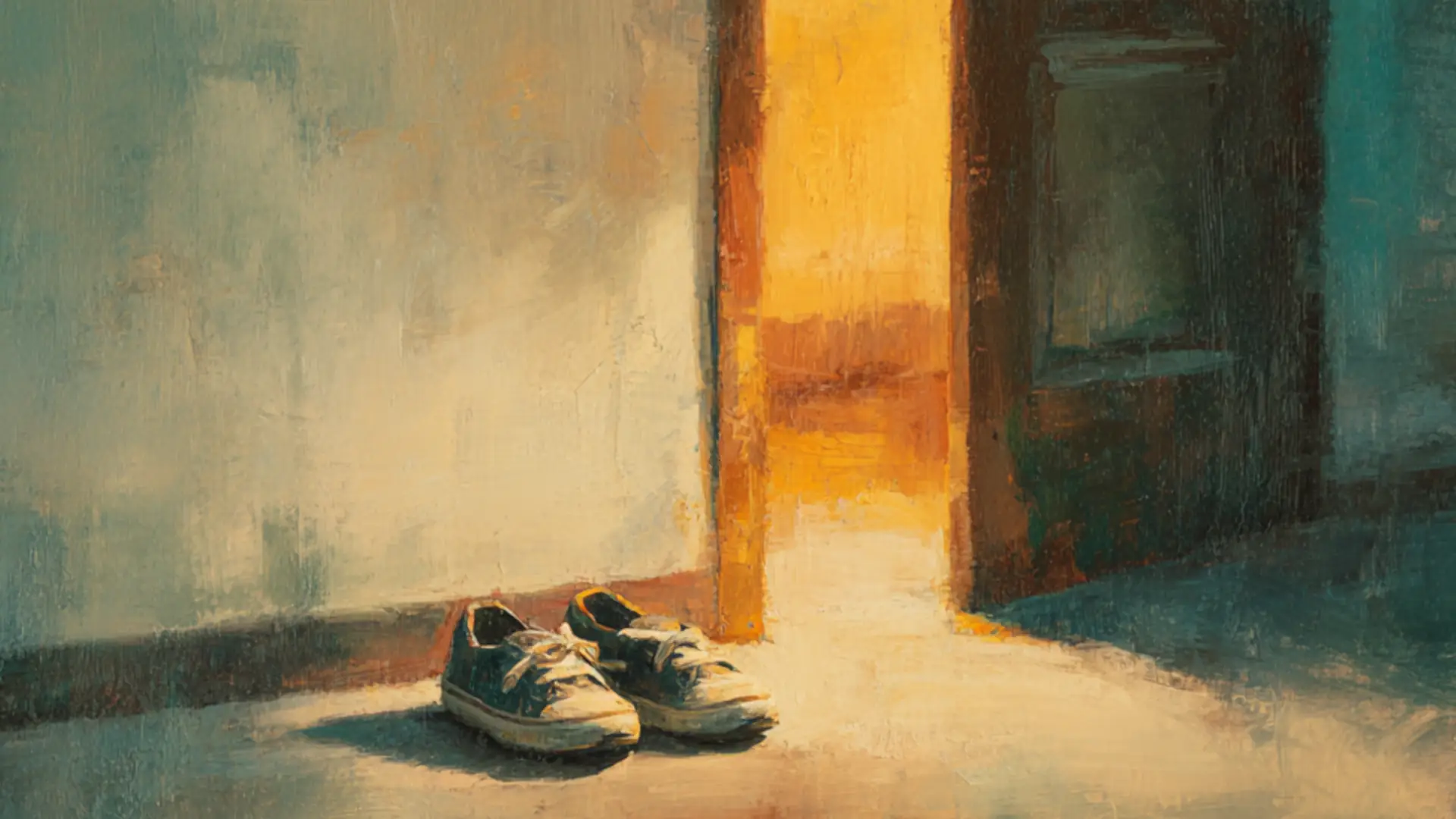
Imagine the palace of possibilities not as a fantasy castle, but as the same home you’ve lived in for years. There are rooms you stopped entering. The doors are still there. The light still works. But you don’t go in. Not because it’s forbidden—because you forgot.
When we slow down and make the nervous system feel safe, something small begins to happen. The inner child doesn’t suddenly sprint into the room. It peeks. It tests the air. It waits for proof that the environment is safe.
This is why force doesn’t work. You can’t shove a scared part into a hallway and expect it to stay. You have to make the hallway safe. You have to move with patience. You have to show that you’re not asking it to prove itself.
A Different Kind of Question
So the real shift isn’t, “How do I push harder?”
The real shift is, “What would make this feel safe enough to try?”
That question changes the entire posture. It tells your nervous system that movement is optional, not forced. It tells the inner child that you’re listening, not dragging.
When your system reads the move as safe, it supports you. When it reads the move as threat, it resists. That’s not weakness. That’s wisdom in action.
Small Shifts That Open Real Doors
- Instead of pushing yourself to be “more disciplined,” ask: What would feel like a gentle step?
- Instead of trying to “break through,” ask: What would feel safe enough to test?
- Instead of telling yourself you should already be past this, say: It makes sense that I’m here. What would help me move without leaving myself behind?
These aren’t tricks. They’re posture changes. And posture matters because it tells your system whether you’re moving toward safety or toward threat.
Why We Move Together
Relational support changes everything. People move differently when they don’t feel alone. When you know you’re not being judged, you stop trying to perform your way out. You can take smaller steps. You can admit uncertainty without collapsing. You can be held without being fixed.
That’s the posture I care about most. We move together. No pressure. No pretending. Just shared ground while you regain movement.
A Final Word
In that posture, a new kind of possibility appears. It doesn’t feel like a fantasy. It feels like a door you didn’t notice before. It feels like a hallway with more than one way forward. It feels like the difference between “I must change” and “I’m allowed to change.”
If you’re in that functional-but-frozen place right now, here’s the simplest truth I can offer you: you are not failing. You are not broken. And you don’t need a grand transformation to begin moving.
You need a small shift in how you relate to the wall.
Instead of asking, “How do I force this?” you can ask, “What would make this feel possible?”
When that question lands, possibility returns—not as a promise, but as a pattern you can begin to practice.
The wall may still be there. But it won’t feel like the only thing that is.
This isn’t about doing more — it’s about feeling safe enough to rediscover who you already are.
What to do next
Continue Reading
Overthinking vs. Pattern Recognition: How to Tell the Difference
