

Regulating in Culture
7 min read
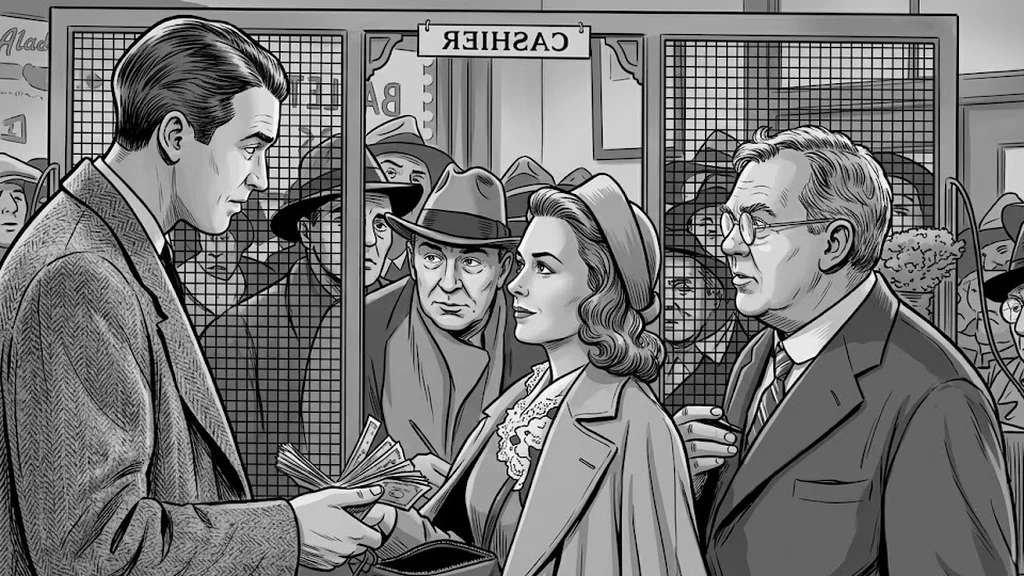
It's a Wonderful Life is often remembered as a story about goodness, sacrifice, and the value of one life. That reading is not wrong. The ending works because George Bailey gets to see what his presence has meant. The town gathers. The missing money is covered. A life that felt wasted is revealed as woven through almost everyone else's.
The Story We Usually Remember
But there is another pattern underneath the warmth of that final scene.
George has become the regulatory organ for an entire town.
He is not only helping people. He is absorbing pressure the system has failed to distribute. When the Building & Loan is threatened, George steadies it. When Potter's logic starts closing around Bedford Falls, George becomes the person standing in the gap. When other people need time, dignity, housing, or a chance not to be swallowed by extraction, George carries the load one more time.
That is what makes the movie more emotionally complicated than a simple story about selflessness.
George wants to leave.
He wants a life that belongs to him. He wants motion, distance, travel, scale, and possibility. That desire is not the problem. It is one of the most human things in the film. The problem is that every movement toward his own life seems to make the town's safety net tremble. Potter is waiting. The Building & Loan is fragile. The people he loves are exposed.
So the fork is not selfishness versus generosity.
The fork is whether care becomes shared structure or collapses onto the one person who can still function under pressure.
When Care Becomes Infrastructure
Many people know this role without having George Bailey's name for it.
The family member who keeps everyone talking. The worker who remembers how the process really functions after the formal documentation stops being useful. The friend who absorbs everyone else's panic and then wonders why they are tired. The leader who says yes again because they can already picture what will happen if they stop.
From the outside, these people are easy to praise. Reliable. Loyal. Strong. Generous. The one you can count on.
Sometimes those words are true.
They are also incomplete.
Praise can hide the body cost of being the person a system uses to stay intact. The praised person may feel their chest tighten every time another request arrives. They may feel guilty before they have even answered. They may resent the role and then feel ashamed of the resentment. They may start confusing collapse-prevention with calling because the system has taught them that if they step back, someone else will pay the price.
That is where regulation changes the reading.
It does not say, "Stop caring." It does not say, "Leave the town to Potter." It does not turn George into the problem. It asks a quieter and more useful question:
What is happening inside the person while everyone is praising them for holding the system together?
The Moment Before the Role Hardens
There is a particular kind of pressure that comes when a person can see the consequences faster than everyone else. They do not need a committee. They do not need a report. Their body has already mapped the collapse.
If I do not answer, the conflict gets worse.
If I do not stay late, the client suffers.
If I do not lend the money, the family fractures.
If I do not remember the detail, the whole thing breaks.
That speed can look like competence. It can also become a trap. The faster the person can feel the potential damage, the harder it becomes to pause long enough to ask whether the burden should belong to them in the first place.
This is the George Bailey pattern. Not care itself. Not responsibility itself. The pattern is the body-level belief that if I stop holding this, people I love will fall through.
That belief may have evidence behind it. The danger may be real. Potter may actually be waiting. The account may actually fail. The family may actually spiral. The team may actually lose the thread.
That is why simple boundary language often fails here. "Just say no" does not touch the deeper charge. The nervous system is not only reacting to a request. It is reacting to the image of collapse that seems to follow refusal.
Regulation Before Redesign
The first move is not always a boundary. Sometimes the first move is enough regulation to tell the truth without going into collapse, anger, guilt, or martyrdom.
This cannot depend on me alone.
That sentence is small, but it changes the room inside the person who can say it. Before regulation, it may sound like abandonment. After even a little steadiness, it can begin to sound like reality.
The body may need help getting there. A pause. A hand on the chest. Tapping through the guilt. Naming the fear directly: if I stop, they fall. Orienting to the room instead of only to the imagined disaster. Letting the over-responsible part tell the truth about how long it has been carrying the load.
The point is not to make the person colder. The point is to give the caring person enough internal space to stop being managed by emergency.
From there, a different kind of responsibility becomes possible.
Documentation can replace hidden memory. Delegated responsibility can replace one-person vigilance. Better tools can carry what used to live in someone's head. Clearer boundaries can make care more honest. Mutual aid, succession planning, cooperative ownership, shared governance, and alternative institutions can begin to distribute what one good person has been absorbing.
The person does not have to stop caring.
They have to stop being the only place where care is stored.
The Part Culture Often Misses
This is why the George Bailey story can still feel so tender and so unsettling. The town's love is real. His impact is real. The community's gratitude is real.
And still, love is not the same as distributed capacity.
A system can adore the person it is overusing. A family can praise the mediator while never learning to speak directly. A workplace can celebrate the person with institutional memory while refusing to build better handoffs. A community can call someone indispensable while quietly accepting a structure that should never depend on one person's exhaustion.
That does not make the people cruel. It makes the pattern worth seeing.
Potter represents one danger: extraction without relationship. But there is another danger on the other side, quieter and easier to romanticize. A community can rely so deeply on one caring person that the person's disappearance into the role starts to look like virtue.
Regulation helps separate those things.
Care is real.
The role may still be too large.
The Reachable Shift
The useful question after watching George Bailey is not whether we should care less. That is too thin. The better question is what kind of support would let care become less concentrated.
Where is one person acting as the memory of the whole system?
Where is one person absorbing panic that others have never learned to regulate?
Where is one person staying because the alternative has been framed as abandonment?
Where has praise become a substitute for shared responsibility?
Those questions do not require a dramatic answer on the first pass. Sometimes they begin with noticing the body. The tightening before saying yes. The resentment after being called dependable. The private fatigue after everyone else feels relieved. The small flash of longing for a life that is not organized around being needed.
That noticing matters.
It is the moment before the role hardens again.
George Bailey shows the beauty of a life that matters. He also shows the cost of becoming the whole safety net. Both can be true. The goal is not to stop protecting what is vulnerable. The goal is to protect it in a way that does not require one person to disappear into the work.
The problem is not that George Bailey cares too much.
The problem is that the town has made his nervous system part of its infrastructure.
And if that pattern feels familiar, the next question may be gentler than it first sounds.
What would become possible if the person holding everything together had enough relief to stop being the whole safety net, without letting the people they love fall through it?
What to do next
Start with E.M.O.
Start with a guided nervous-system support experience.
Take the EFI
Get emotional clarity and identify your current regulation pattern.
1 on 1 Session
Work directly with guided support when you want faster progress.
