

Regulating in Culture
6 min read
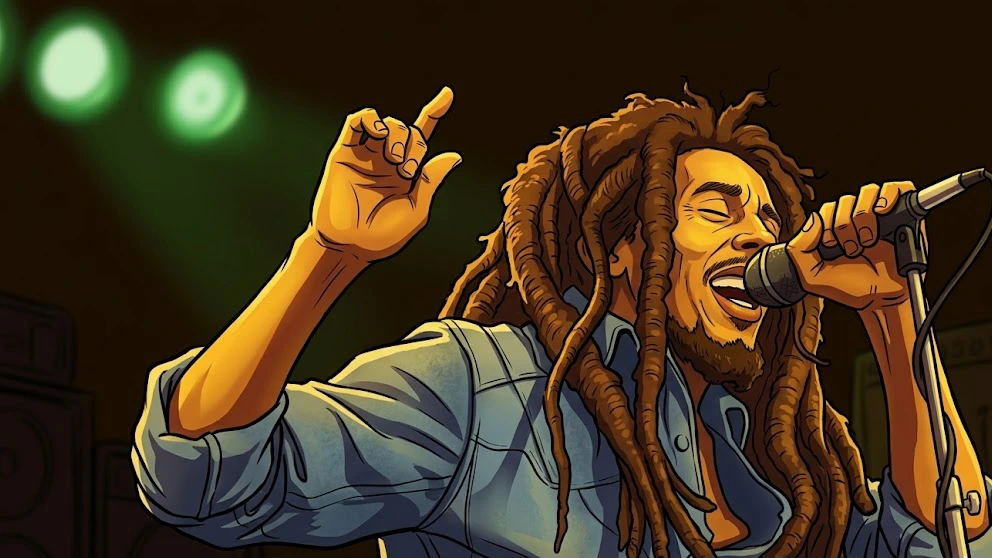
Sometimes a song lyric explains the nervous system faster than a week of analysis. You hear Bob Marley name a world of mass confusion, and something in you recognizes that the problem is not only bad information. It is the feeling of living inside an atmosphere that keeps pulling attention away from your own center.
The Line Lands Because It Names An Atmosphere
Part of what makes that Marley line stay alive is that it does not treat confusion like a random accident. It gives the feeling that distortion can be built, repeated, and made ordinary enough that people stop noticing what it is doing to them.
That does not require a grand theory in order to be true. You do not have to prove a mastermind behind every contradiction to notice the atmosphere itself. It is enough to notice the rhythm: one headline says the danger is obvious, another says the danger is exaggerated, a third says the real problem is everyone else reacting badly, and by noon your body is already leaning forward as if clarity might be hidden in the next screen.
This is why the line feels bigger than commentary. Marley is not only naming a public problem. He is naming a lived environment. An environment can shape the body long before it becomes a settled opinion.
Confusion Is Not Only A Thinking Problem
When people talk about confusion, they often talk as if the answer is purely intellectual. Read more carefully. Compare sources. Work harder. Stay informed. Sometimes that helps. But if the atmosphere itself is disorienting, more input can also become more activation.
The body does not wait for a final conclusion before it responds. It notices contradiction. It notices reversal. It notices the pressure to keep checking. It notices the absence of settling.
That can show up in very ordinary ways. Your shoulders stay slightly raised while you are sitting still. Your eyes keep moving even after you have read enough. Your chest feels narrow. You become quick to react and slow to absorb. You may tell yourself you are being responsible, but another part of you is simply trying to regain orientation.
That is the turn this kind of post is trying to make visible. Culture is not always just background. Sometimes it becomes a regulation burden.
Illusion Works By Weakening Your Own Reading
The deeper danger is not only that culture gets loud. It is that loudness can start replacing your own reading of things.
This is where the idea of illusion becomes useful. Illusion does not have to mean that every visible thing is fake. It can mean something quieter and more effective: your attention gets trained to trust the strongest signal more than your own pacing, your own body, or your own sense of when enough is enough.
That shift matters. Once self-trust weakens, certainty hunger usually grows.
The clearest voice starts to feel like shelter. Complexity starts to feel expensive. Reflection starts to feel like delay. You may find yourself reaching for someone else to tell you what this all means, not because you are shallow, but because the body is tired of standing on moving ground.
This is one reason the Marley line still hits. It is not only about what is being said out there. It is about what repeated distortion does in here.
The Fork Is In The Present Moment
The fork in a piece like this is not mainly in Bob Marley, and it is not mainly in the culture object itself. The fork is in the present moment of hearing the line and noticing what becomes live in you now.
Do you keep letting confusion become the body state from which everything else gets interpreted?
Or do you notice that the atmosphere is activating you before it hardens into identity, worldview, or reflex?
That is the usable moment. Not because you suddenly become detached from public life, and not because the culture becomes simple. The usable moment is that you stop making total meaning from an activated state.
Once that distinction becomes visible, a lot of things read differently. The urge to refresh reads differently. The urge to argue reads differently. The urge to fuse with the loudest interpretation available reads differently. You start to see that some of what felt like conviction was actually the body trying to escape disorientation fast.
Regulation Is How You Refuse Borrowed Reality
This is where regulation belongs. Not as a performance of calm, and not as a refusal to care. Regulation is what helps you keep the atmosphere from colonizing the whole system.
Maybe the first move is simply naming what is happening: this is not only information overload; this is activation.
Maybe the next move is orienting. You look away from the screen. You feel the chair under you. You let your eyes land on one ordinary thing in the room that is not demanding interpretation. You notice your jaw. You notice your breath. If tapping is already part of your practice, this is a good place for it. Not to make the world disappear, but to interrupt the trance of borrowed urgency.
That interruption matters because confusion often gains power by making reaction feel immediate and necessary. Regulation lengthens the gap just enough for discernment to come back online.
Then the question changes. It stops being, Who is right? fast enough to soothe me. It becomes, What state am I in while I am trying to read this at all?
What Changes When The Atmosphere Stops Owning You
Usually the shift is modest at first.
You do not become perfectly calm. You do not stop caring. You do not solve public life. What changes is smaller and more important than that.
You become a little less available to manufactured urgency.
You become a little less tempted by loud certainty.
You become a little more able to let contradiction exist without immediately handing over your center.
That is not passivity. It is steadiness.
And steadiness matters because it restores self-trust. You can feel the difference between concern and activation. You can tell when you need more information and when you actually need less exposure. You can stay awake to culture without letting culture dictate your internal climate.
That is what makes the Marley doorway useful. The line does not only diagnose the world. It helps name the moment when the world of confusion starts living in the body.
Once you can name that moment, you are no longer trapped inside it in quite the same way. You have somewhere to stand. You have something workable to do. And you have a better chance of returning to your own reading before the next wave of noise arrives.
What to do next
Start with E.M.O.
Start with a guided nervous-system support experience.
Take the EFI
Get emotional clarity and identify your current regulation pattern.
1 on 1 Session
Work directly with guided support when you want faster progress.
