

When You Keep Pushing but Feel Smaller
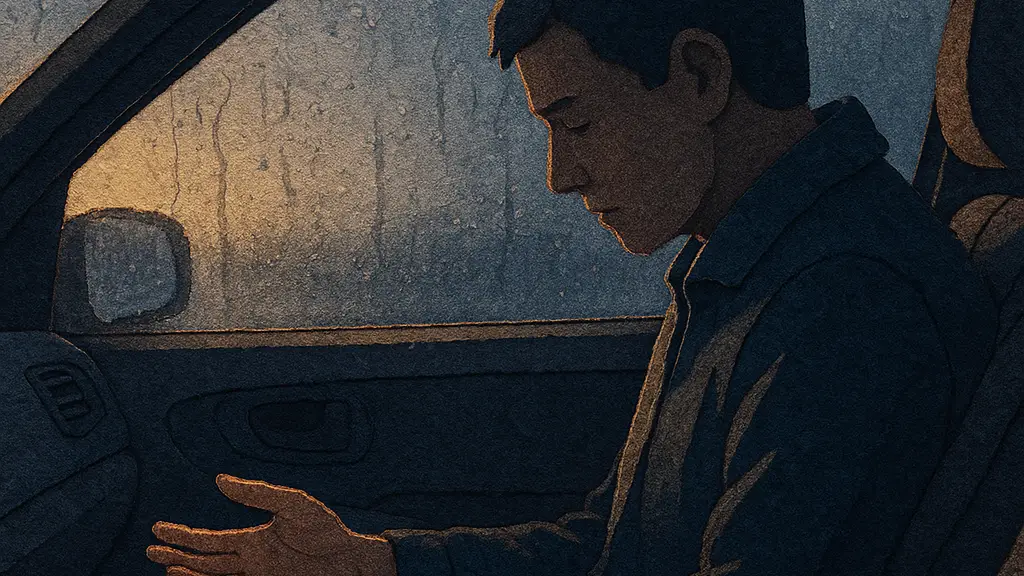
You get through the hard week. You answer the messages, finish the work, hold the conversation you did not want to have, and keep moving because that is what capable people do. Then the house is quiet, the task is done, and your body still feels like it is bracing for impact. Your jaw is tight. Your breath is shallow. You sit down to rest, but nothing in you seems to believe rest is happening.
That moment matters more than most growth advice admits.
Many people have been taught to trust endurance. If you can stay standing, keep performing, keep showing up, it is easy to assume you are becoming stronger. Sometimes that is true. But sometimes what looks like strength is simply continued activation. The system is still carrying what the challenge stirred up. The effort ended, but the charge did not.
This is part of why hardship can feel so confusing. You may be doing difficult things that genuinely matter. You may even be meeting them well. And still, somewhere beneath the surface, stress keeps stacking up faster than it clears. The result is not dramatic at first. It is subtle. A little more irritability. A little less flexibility. More dread before ordinary tasks. More effort required to do what used to feel simple.
That does not mean you are failing growth. It may mean your system has learned how to endure stress better than it has learned how to come back from it.
Why Endurance Gets Overcredited
Our culture tends to admire strain. We often treat stress as if it were proof that something important is happening. There is a familiar story underneath that: if challenge shapes us, then more challenge must shape us more.
But living systems do not work that cleanly.
A muscle does not grow from resistance alone. Resistance creates demand. Recovery turns that demand into adaptation. Without repair, the same stimulus that could have strengthened the body eventually becomes depletion. Most people understand this in physical training. Far fewer apply the same logic to the rest of life.
Emotional strain, uncertainty, conflict, overwork, grief, transition, constant vigilance, all of these place a load on a person. Some amount of load can expand capacity. But that only happens if the system experiencing the load can settle, integrate, and return. Otherwise the challenge is not building strength so much as leaving residue.
Challenge also tends to help in variable doses, not as a constant atmospheric condition. Living systems usually adapt through pulses of demand, recovery, and re-entry. Constant low-grade pressure teaches vigilance more than flexibility. A person can get very good at functioning inside one narrow band of strain and still become more brittle when something unexpected arrives.
That residue often gets mislabeled. We call it discipline when someone ignores exhaustion. We call it maturity when someone stops feeling much at all. We call it resilience when someone keeps functioning while privately becoming more brittle. Yet there is a difference between having capacity and overriding distress. One is adaptive. The other is expensive.
Antifragility is not just exposure to difficulty. It is exposure that can be metabolized.
The Body Needs to Know the Threat Is Over
Stress is not only an idea. It is an event in the body.
The heart rate rises. Attention narrows. Muscles prepare. Breathing changes. Energy mobilizes. This is not a flaw. It is part of how a living system meets demand. The problem begins when that mobilization does not complete. The stressful event passes, but the body continues acting as though it has not.
Then the person starts carrying yesterday into today.
Coming down is not one thing. Some forms of recovery are passive: sleep, time, fewer inputs, a quieter evening. Others are active: breath that lengthens the exhale, movement that lets tension discharge, tears, shaking, a boundary finally spoken, a body that gets enough evidence to stop rehearsing the threat. Both matter, and neither should be turned into another performance metric.
This is why recovery is not a luxury add-on for fragile people. It is part of the growth cycle itself. If the body never receives enough evidence of safety, it cannot fully register that the challenge is over. If it cannot register completion, it cannot meaningfully reset. If it cannot reset, the next challenge arrives on top of the last one.
That stacking process is what many people mistake for life simply getting harder. Sometimes life is harder. But sometimes the burden is cumulative activation. The system is not only responding to what is in front of it. It is also responding to what never got discharged from before.
And sometimes the vigilance is accurate. If a person is living with financial precarity, caregiving without relief, an unsafe relationship, discrimination, or a work culture that punishes visible recovery, the body may be reading the environment correctly. In those cases, the answer is not only to regulate better inside the same conditions. Sometimes the work is also to change the stressor, reduce exposure, add support, or create one small pocket of real safety.
When stress is chronic, the goal may not be a full clean completion every time. It may be rhythm. A shorter bracing period. A quicker return of breath. A few moments of genuine settling inside ongoing demand. Not perfect closure, but better oscillation.
This helps explain why intelligent, self-aware, committed people can suddenly find themselves shutting down around things they know they can technically handle. It is not always a problem of character. Sometimes it is a problem of load without enough release.
What Accumulation Looks Like in Real Life
Accumulated stress does not always announce itself as collapse. Often it appears in ordinary disguises.
You become oddly avoidant about a task you care about. You need more recovery time after a normal social interaction. You overprepare for small risks. You feel wired at night and flat in the morning. A conversation ends, yet your body keeps replaying it long after your mind has decided it is over.
In another small scene, someone closes their laptop after a packed day and notices they cannot exhale fully. Nothing catastrophic happened. No crisis, no major conflict. Just a day of meetings, problem solving, subtle self-monitoring, and staying composed. By evening they are not only tired. They are still internally organized around demand. That is the kind of stress accumulation that hides in plain sight.
This is important because many thoughtful people do not ignore stress. They reflect on it. They analyze it. They understand why they feel what they feel. But insight and completion are not always the same thing. A person can know exactly what happened and still be carrying the physiological imprint of it.
When that imprint builds over time, the effects can start to look like burnout, shutdown, or avoidance. Not because the person is weak. Not because challenge was wrong. But because the cycle was incomplete.
Growth Requires a Full Cycle
A more honest model of growth is simple, though not simplistic: stress, release, and re-engagement.
First there is activation. Something meaningful asks more of you than your current resting state requires. Then there is release. The system comes down enough to stop rehearsing survival. Then there is re-engagement. You meet life again with less leftover charge and more usable capacity.
That middle movement is easy to skip because it looks unimpressive. It does not flatter the ego. It is often quiet, private, and hard to measure. It may involve rest, movement, breath, tears, shaking, laughter, silence, or the slow return of a fuller exhale. It may involve letting the body register that contact with difficulty has ended.
None of this is magical, and it should not be romanticized. Release is not a miracle switch that erases pain or instantly repairs every layer of overwhelm. But it does matter. It lowers the internal cost of adaptation. It gives the organism a chance to complete what stress began. It makes return more possible.
Without that cycle, challenge can become a form of accumulation. With it, challenge becomes more workable. Not easy, not harmless, but workable.
Recovery Is Not Softness
Some people resist this idea because recovery can sound passive, indulgent, or secondary. It can seem less serious than endurance. But real recovery is not avoidance of life. It is what allows contact with life to remain possible.
A person who never comes down from stress may keep functioning for a while, but their world often gets narrower. They become more defended, less curious, less spontaneous, less available. They can still perform, yet their range shrinks. That is not antifragility. That is survival staying in the driver's seat.
By contrast, a person who can recover is not necessarily less challenged. They may actually be able to meet more. The difference is that difficulty does not have to harden into identity. Stress becomes a state they move through, not a climate they live inside.
This is a maturer way to think about strength. Not as endless tolerance for pressure, but as the ability to experience pressure, settle afterward, and return without so much residue. Not proving worth through how much you can hold, but building capacity through how well you can come back.
A Better Question to Ask Yourself
Instead of asking whether you can handle more, ask: what happens in you after the hard thing passes, or when there is finally a little space?
Do you settle, or do you stay braced? Do you return, or do you withdraw? Do you feel clearer with repetition, or more compressed by it?
Those questions are not signs of weakness. They are signs of precision. They shift the focus from heroic endurance to actual adaptation.
If this reframing fits your experience, the next useful step is not to seek more stress in the hope that it will somehow make you stronger. It is to learn what helps your system come back down.
And if you read this and realize you have not really come down in years, that is not failure. That is information. Start with one fuller exhale, not a full protocol.
If you want guided help, Talk to E.M.O. and start with the Managing Stress flow.
If you would rather read first, continue below.
What to do next
Start with E.M.O.
Start with the free Managing Stress flow if you want guided help releasing tension and overwhelm in real time.
Take the EFI
Get emotional clarity and identify your current regulation pattern.
1 on 1 Session
Work directly with guided support when you want faster progress.
