

What If
9 min read
Emotional regulation is usually introduced after breakdown. A child is already melting down. A teenager is already shutting down. A meeting has already become reactive. A family night has already become a standoff. Only then does regulation enter the picture, usually as intervention, remediation, referral, or recovery.
The Starting Point We Rarely Question
That pattern looks practical because it responds to visible pain. It also creates a quiet distortion. It teaches people to associate regulation with trouble. The skill gets framed as something for the hardest moments, for the people in the most obvious distress, or for the point when the system has already lost access to judgment. Schools, homes, workplaces, and care systems then become overly dependent on downstream crisis response instead of earlier everyday skill.
A lot of public life is still organized around that assumption. Wait for the problem. Name the problem. Escalate the response. Help arrives late, when the room is already carrying more activation than it needed to.
A Different Public Question
What if the more useful question was not how to respond better after stress has already taken over, but how to teach people earlier what stress feels like in the body and what to do in the first minute?
That is a different kind of imagination. It moves from seeing regulation as a late intervention for visible problems to seeing it as early shared infrastructure. Not therapy for everyone. Not a promise that life becomes calm. Not a claim that simple practices erase structural pressure. Something more ordinary and more demanding than that.
It asks whether regulation could be taught the way reading, handwriting, or physical education are taught: early, repeatable, and normal enough that people stop treating it like a specialty response. If that happened, the goal would not be to eliminate activation. The goal would be to give more people enough skill to recognize activation sooner, slow escalation earlier, and return to thinking before the whole environment gets recruited into the stress state.
That kind of shift would not announce itself with a grand transformation story. It would show up as a series of scenes so ordinary they would be easy to miss.
The Fourth Grade Pause
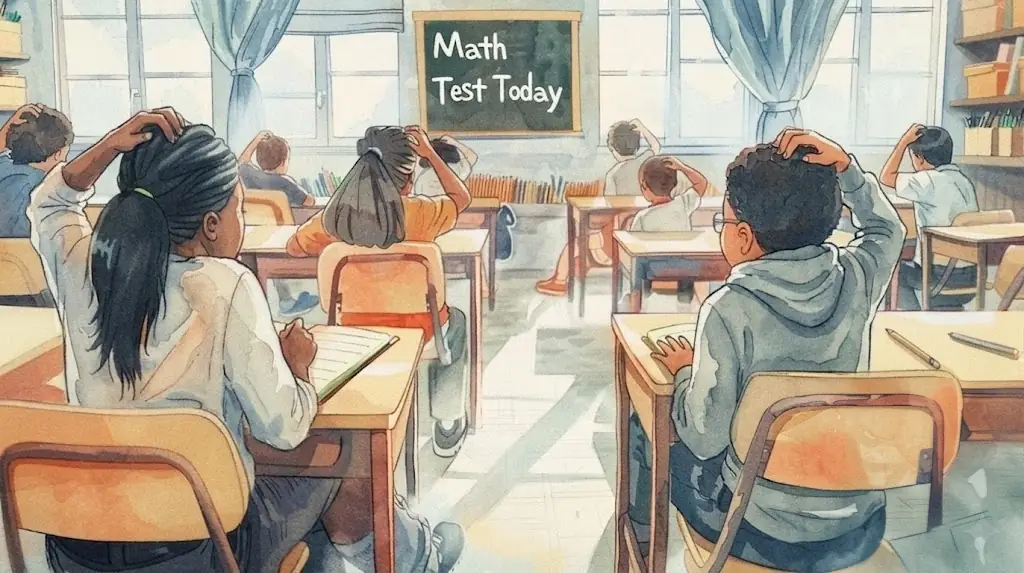
On a Tuesday morning in a fourth grade classroom, a teacher pauses the lesson for thirty seconds. Not because anything has gone wrong. Because the class is about to take a math test, and everyone knows what comes next. Feet on the floor. One slow breath. A short tapping sequence the students learned at the beginning of the year.
The power of the scene is how unremarkable it is. No one stops to explain the theory every time. No one treats it as an emergency protocol. It is simply part of how this school handles moments that might feel big. The routine is ordinary now, and because it is ordinary, it becomes usable.
That matters more than it first appears. Children do not just learn content from repetition. They learn what kinds of states are workable, what kinds of pauses are allowed, and whether stress has to be hidden until it spills over. A classroom like this quietly teaches that pressure can be met before it becomes panic.
How The Skill Leaves The Building
If regulation is taught early, it does not stay in the building where it started.
Across town, a project manager opens a meeting after weeks of pressure from a product delay. In the older version of this room, this is where voices would tighten and decisions would begin arriving faster than thought. Instead she says, "Let's take two minutes before we dive in." Cameras stay on. A few quiet breaths. The room settles. The meeting is not suddenly effortless. The pressure is still real. What changes is that judgment returns before the discussion becomes defensive.
At a high school a few miles away, a student sits in the hallway outside chemistry class. The wave of anxiety before exams is familiar now, but no longer mysterious. It used to feel like proof that something was wrong with them. Now it feels recognizable. Two fingers press to the side of the hand. A short sequence learned during orientation. By the time the bell rings, the chest is not perfectly calm, but it is settled enough to walk back inside.
Later that afternoon, a pediatrician finishes an appointment with a parent worried about a child's emotional outbursts. Ten years ago the conversation might have ended with concern, a referral, and a long waiting list. Here, the doctor spends three minutes teaching a simple way to help the child's body settle when emotion spikes. It is not framed as a last resort. It is described the same way sleep routines or nutrition advice might be described: a basic skill that makes life more workable.
These are different places with different responsibilities. What links them is not ideology. It is transfer. When a skill becomes normal early enough, people carry it with them.
What Changes At Home
The most persuasive version of this What If may not be the classroom or the clinic. It may be the kitchen.
That evening a parent stands beside an eight year old unraveling over homework. The parent feels the familiar rise of irritation in their own body. In the old sequence, that sensation would have gone unnoticed until it had already become tone, then conflict, then a night stretched thin by mutual escalation. In the newer sequence, the signal gets recognized earlier. The parent pauses. The breath slows. The child mirrors the shift just enough. The storm still happens. It just ends sooner.
That is a useful distinction. This alternative does not promise a friction-free home or a permanently regulated culture. Stress remains real. Children still melt down. Adults still get tired. Meetings still carry pressure. The difference is that more people know how to notice the first signals in time to keep the whole setting from becoming organized around them.
That is why early skill matters. It changes not only whether people have tools, but when those tools become available. One minute earlier can be the difference between a hard moment and a full-system escalation.
What Makes This More Than A Nice Idea
For this kind of cultural shift to become believable, three practical conditions matter.
The first is early instruction without stigma. Regulation has to be taught before visible breakdown becomes the admission ticket. If the skill only appears after the label, many people will keep learning it too late or avoiding it altogether. Early instruction makes regulation part of ordinary development instead of a special response to failure.
The second is repetition around normal stress, not only exceptional crisis. A pause before a test, a reset before a meeting, a short settling tool before an exam, a simple way to slow the body before a hard conversation. These small repetitions matter because they make the skill portable. People remember what they can practice under ordinary pressure.
The third is adult adoption. If children are the only ones expected to regulate while adults continue escalating around them, the lesson stays narrow. But when teachers use the same routines in staff meetings, when clinicians use simpler language around body state, when parents start recognizing their own rise earlier, the skill stops feeling like a school exercise and starts becoming a social pattern.
This is how early shared infrastructure works. It becomes visible through repetition, not declaration.
What We Would Notice Over Time
If this alternative were real, the evidence would not begin with grand claims. It would begin with smaller observable shifts.
More situations would be interrupted earlier, before they reached full escalation. A test would still feel important, but fewer students would tip from nerves into overwhelm without any map for what was happening. Meetings under strain would still involve disagreement, but the room would spend less time recovering from reactivity. Pediatric visits would still involve hard family realities, but more parents would leave with something usable before crisis was the only language left. Home conflicts would still happen, but they would consume fewer hours and leave less residue.
You would also expect a change in recognition. More people would know what activation feels like in their own bodies before the story hardens around it. Anxiety would become more nameable. Irritation would become more interruptible. Pressure would remain pressure, but it would be less likely to move through a room as if no one had any influence over its timing.
None of that means specialized care disappears. Some situations will always require deeper support, urgent intervention, or long-form healing. The point is not to replace crisis care. The point is to stop asking crisis care to carry the full burden of emotional education.
The Culture That Grows Quietly
The most compelling part of this What If is not the promise of calmer individuals. It is the possibility of quieter diffusion.
A classroom routine becomes a workplace practice. A student skill becomes a parenting habit. A pediatric conversation becomes a more livable evening at home. No single scene looks historic. Together they begin to alter what a city expects from itself.
That is the deeper horizon here. Emotional regulation would no longer be treated mainly as a response to crisis. It would become part of how ordinary people prepare for pressure before pressure recruits the whole environment. The skill would stay simple enough to travel and common enough to repeat.
If that sounds modest, it is. It is also how many durable cultural changes actually work. They begin upstream, repeat quietly, and become legible only when you notice how many different places are being shaped by the same early decision.
Perhaps that is the more useful measure of a regulation-first future. Not whether stress disappears, but whether fewer lives need to wait for breakdown before support becomes thinkable.
What to do next
Start with E.M.O.
Start with a guided nervous-system support experience.
Take the EFI
Get emotional clarity and identify your current regulation pattern.
1 on 1 Session
Work directly with guided support when you want faster progress.
