

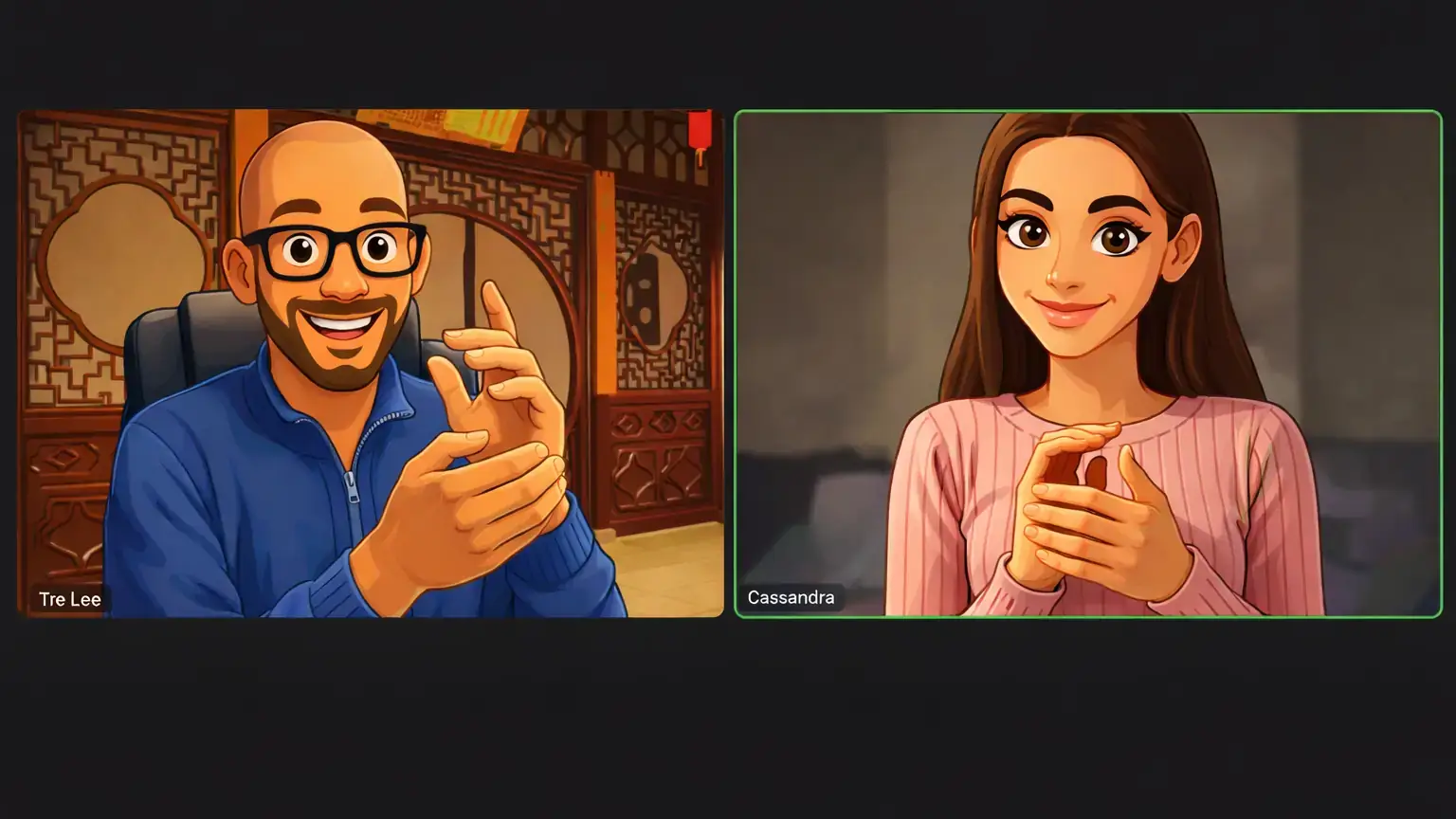
What a 1 on 1 Session Actually Feels Like
A lot of hesitation around 1 on 1 support has less to do with resistance and more to do with imagination.
Before anyone books, they usually run a quiet simulation. They picture a serious room. A serious tone. Someone studying them carefully, waiting for something vulnerable to surface. They imagine being asked a question they cannot answer cleanly. They imagine intensity. Exposure. Pressure.
The body responds to that imagined scene as if it were already happening. The shoulders tighten. The jaw sets. A small thought appears: maybe later. Maybe I should get clearer first. Maybe I should try a few more things on my own.
That pause makes sense.
Most people have had experiences where opening up did not go well. They were rushed. Interpreted too quickly. Given advice when they needed patience. Or they felt seen in a way that was sharp instead of steady. The nervous system learns from moments like that. It stores the lesson quietly: being seen can cost something.
So when the idea of 1 on 1 support appears, the protective reflex comes online. Not dramatic. Just cautious. It says, stay in control. Stay prepared. Do not walk into something you cannot manage.
At the same time, another part of you is tired.
You are thoughtful. You have likely done a fair amount of inner work already. You understand your patterns. You can explain where they began. You notice your triggers more quickly than you used to. And still, there are moments that catch you. A comment that lands harder than expected. A tone shift that tightens your chest. A conversation you replay long after it ends.
It is not that you lack insight. It is that the pattern lives in timing and sensation, not just in understanding.
That is often where curiosity about live support begins. Not from desperation, but from quiet honesty. Something inside recognizes that thinking about the pattern is different from shifting it in real time.
And then the imagination returns.
Is it going to feel heavy. Will I be put on the spot. Do I need to arrive already composed. What if I cannot articulate what is wrong.
These are reasonable questions. They come from a nervous system that wants to know what it is walking into.
A well held 1 on 1 session is not a performance. You are not evaluated on how clearly you speak or how coherent your story is. You do not need to present a polished summary of your life.
You arrive with what is present that day.
Sometimes that is obvious tension. A tight throat. A restless body. Irritation that feels disproportionate. Other times it is fog. You might say, I do not even know what I feel, I just feel off. That is enough.
The work does not begin with digging. It begins with noticing.
What is happening in your body right now. What changes when you describe it. What happens to your breath when you slow down by a few seconds. These are small observations, but they are precise. They orient the session around your nervous system rather than around an agenda.
The pace matters more than the content.
If your speech speeds up, that is information. If your eyes drift or your shoulders lift, that is information. Instead of pushing through those cues, the session adjusts to them. Slowing down is not a failure. Pausing is not avoidance. It is regulation.
This is often the most surprising part for people. They expect intensity. They find steadiness.
There is no requirement to force tears. No expectation that something dramatic must happen for the hour to count. Sometimes the shift is subtle. A sentence that feels truer than the one before it. A moment where your body softens without you having to command it. A realization that you can stay present with something that used to overwhelm you.
That does not feel like exposure. It feels like being accompanied.
Being accompanied changes the equation.
When you sit alone with a difficult feeling, it can expand quickly. It can blur into old stories. It can trigger self judgment. When you sit with someone whose attention is steady and unhurried, the same feeling often becomes more specific. More workable. It takes shape.
Internal space grows in small increments. The gap between trigger and reaction becomes visible. You begin to notice the moment just before you brace. That moment is where choice lives. It is also the place that is hardest to access on your own.
None of this requires you to be fixed already.
You do not have to be calm before you arrive. You do not have to know exactly what you want to work on. You do not have to have the right language. The session meets you where you are, not where you think you should be.
If you are the kind of person who prefers to warm up slowly, that is respected. If you need clarity before going live, tools like EFI can help you see your patterns more cleanly. If daily guided practice feels like the right foundation, E.M.O. offers that rhythm.
And if what you are really curious about is what it would feel like to sit across from someone and work in real time, you may not need more preparation.
At a certain point, the question shifts from can I handle this to does this feel aligned.
If the idea of a paced, attuned conversation feels different than what you imagined. If the fear has softened into cautious interest. If you can picture yourself arriving as you are and being met there.
Then booking a 1 on 1 session is not a leap. It is simply the next reasonable experiment.
Not because you are broken.
Not because you failed at doing it alone.
But because you are ready to experience your patterns in a different context. One that is steady enough for your system to relax, and precise enough for change to feel possible.
You can take your time deciding. And when it feels right, the door is open.
Best next step
You have reached the end of this reading path. If you want the clearest next move, start here.
Recommended next step
1 on 1 Session
Work directly with guided support when you want faster progress.
Book a session