

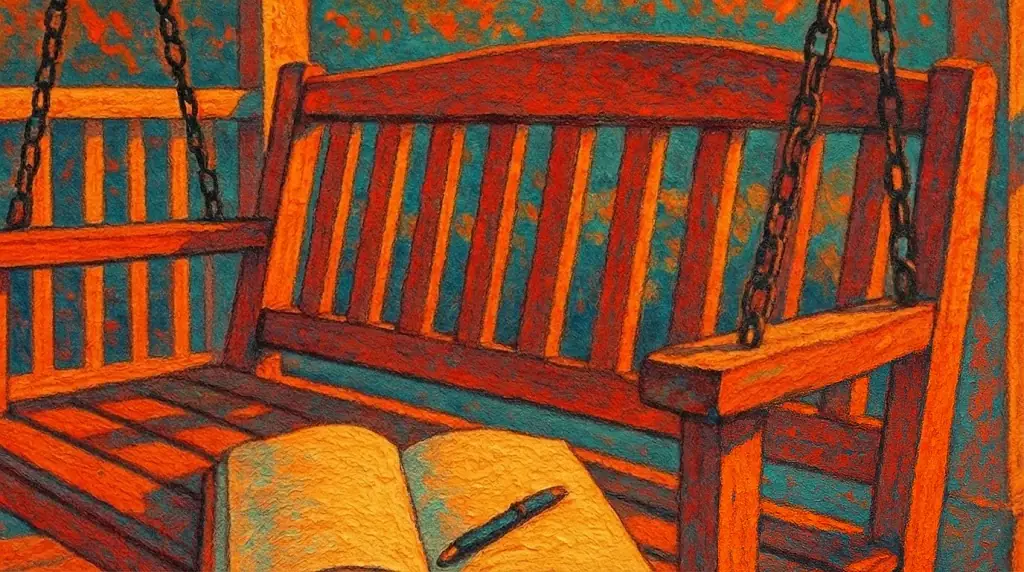
The Wall That Tells You to Keep It Together
Gateway Category: Inner Peace
The Quiet Load You Carry
You keep the system running. You remember the appointments, hold the family, manage the calendar, absorb the extra work. You do not fall apart. You do not take up space. You keep going.
And then there is the quiet part no one sees: the inside that feels crowded, tired, and a little lonely. It is not a dramatic breakdown. It is a subtle stall. You can feel the need for rest and support, but the step toward it feels complicated. The line on the wall keeps you in place.
The Writing on the Wall
In Gary Craig’s “Palace of Possibilities,” he uses a metaphor that is simple and piercing. We live in a palace full of rooms we could enter, yet most of us stay in a few. The doors are open, but the writing on our walls tells us where we belong. Those sentences are our inner advisor. We consult them all day, often without realizing it.
For caretakers, the writing usually sounds like duty. “Don’t fall apart.” “Don’t be a burden.” “There isn’t time for you.” The line is familiar, sometimes even noble. But it also becomes a limit. It decides how much care you are allowed to receive. It decides how much rest you are allowed to need. It decides what kind of help is acceptable and what kind is shameful.
When Survival Rules Become Life Rules
Here is the hard truth: most of that writing was never authored by you. It was inherited from parents, culture, religion, or hard seasons that taught you to be the one who can handle everything. The sentence felt like survival, so you made it law. But survival rules are not always life rules.
When you keep consulting that wall, you keep shrinking to fit it. Your nervous system learns that asking for support is risky. It learns that pausing is unsafe. It learns that you are only safe when you are useful. That is a quiet, exhausting way to live.
The Small Rewrite That Opens a Door
The palace metaphor is powerful because it points to a different kind of change. You do not need to blow up the wall. You do not need to storm into a new life. You need to soften the emotional grip of the old sentence and rewrite one line.
Notice the difference between these two lines:
- I must keep it together, or everything falls apart.
- I can pause without abandoning anyone.
The first line is a threat. The second line is a permission. When the second line becomes believable, a new room opens. You can take a small pause, and the world does not end. You can receive a small kindness, and no one resents you. You can ask for help, and you are still respected.
Inner Peace Is a Safety Signal
This is not about being less responsible. It is about carrying responsibility in a way that includes you. You are part of the system too. If you are constantly depleted, the system is brittle. If you are supported, the system is resilient.
Inner peace does not require a dramatic breakthrough. It often starts with a small door.
A small door can be a five-minute pause without apology. It can be a request for help that is specific and modest. It can be choosing not to fill every empty space with one more task. It can be letting someone else do it their way, not your way, without correcting them.
Each small door teaches your nervous system a new lesson: movement can be safe. Receiving can be safe. Rest can be safe. When the body reads safety, your choices expand. That is what the palace represents. It is not a fantasy. It is your real life with a new line on the wall.
A Practical Starting Point
If you want a practical place to start, try this:
- Name the line on the wall. Write it down as a sentence you hear inside. Be honest, even if it feels harsh.
- Ask who wrote it. Was it truly your voice, or did it arrive from an old season, a parent, or a culture that needed you to be strong?
- Write a truer line that still respects your responsibilities. Keep it small, believable, and kind.
Here are a few examples of truer lines:
- I can receive without becoming a burden.
- I can ask for help without losing respect.
- I can pause and still be reliable.
- I can take up a little space and still be loved.
When you read these lines, notice what your body does. If one line feels impossible, it might be too far from your current nervous system truth. Make it smaller. The goal is not to force belief. The goal is to find a sentence that creates a little exhale.
A Final Word
You do not need to fix yourself. You need to relate to the wall differently. The old line can soften. The new line can take its place. Then the room expands.
If you are in a season of holding a lot, I want you to hear this clearly: you are not selfish for needing care. You are not weak for needing rest. You are not failing because the pace is heavy. You are human.
Inner peace is not earned by doing more. It is restored by remembering you are allowed to be here too. The palace opens when the writing on the wall changes from “I must carry everything” to “I can be supported while I carry.” That is a door worth walking through.
What to do next
Continue Reading
Support options
Recommended next step
Start with E.M.O.
Start with a guided nervous-system support experience.
Talk to E.M.O.Take the EFI
Get emotional clarity and identify your current regulation pattern.
Take the EFI1 on 1 Session
Work directly with guided support when you want faster progress.
Book a session